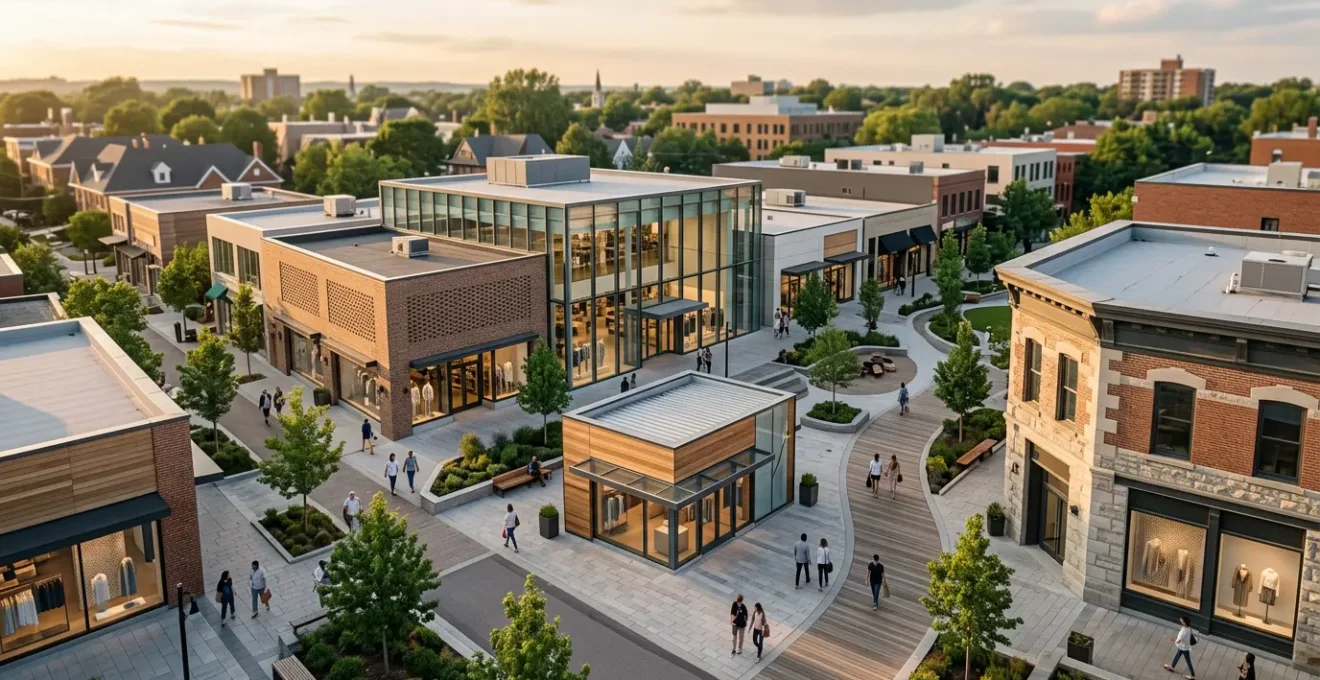
True retail network management isn’t about imposing uniform standards, but about applying a dynamic, lifecycle-based framework where operational protocols adapt to each unit’s specific age, format, and market role.
- Grading outlets (A-D) based on multi-factor diagnostics—not just sales—is essential for prioritizing capital-intensive renovations.
- The brand experience must be standardized in principle but adapted in practice for diverse formats like high-traffic kiosks and immersive flagships.
Recommendation: Begin by implementing a portfolio-wide audit to grade every outlet, creating the data-driven foundation for all future renovation, relocation, or closure decisions.
For an operations director, managing a sprawling network of retail outlets is a complex balancing act. The portfolio is never uniform; it’s a living ecosystem of gleaming new flagships, aging yet profitable workhorses, compact urban kiosks, and sprawling suburban superstores. The common approach often involves reactive, blanket solutions: a network-wide design refresh or a simple mandate to close the bottom 10% of performers. This one-size-fits-all strategy, however, ignores the fundamental differences in each unit’s lifecycle stage, format, and strategic purpose.
Attempting to apply the same operational standards or renovation schedule to a high-speed transit kiosk and an experiential flagship store is not just inefficient; it’s strategically flawed. It leads to wasted capital, frustrated franchisees, and a diluted brand experience. The core challenge isn’t a lack of standards, but the application of the *wrong* standards in the wrong context. This is where a more nuanced, structural approach becomes not just beneficial, but necessary for long-term network health and profitability.
But what if the key wasn’t enforcing a single, rigid template across the board? What if, instead, the most effective strategy was to develop a dynamic, lifecycle-based framework? This perspective treats the retail network as a portfolio of assets, each requiring a specific, standardized operational response based on its diagnosed condition and strategic role. It moves the conversation from “renovate or not” to a sophisticated analysis of grading, adaptation, and calculated investment.
This guide provides that structural framework. We will break down how to grade your diverse fleet, adapt the customer journey for different formats, make data-driven decisions on relocation, and manage the lifecycle of each outlet—from revitalization to retirement. It’s about creating a system that brings order to the chaos, ensuring every dollar invested and every operational decision made maximizes returns and strengthens the entire brand.
To navigate the complexities of managing a varied retail portfolio, this article is structured to provide a clear, step-by-step framework. The following sections will guide you through the critical decisions and strategic considerations for optimizing your network’s performance and longevity.
Summary: A Strategic Framework for Outlets of All Vintages and Formats
- Why Grading Your Outlets from A to D Helps Prioritize Renovations?
- Kiosk vs Flagship: How to Adapt the Customer Journey Without Diluting Experience?
- Relocate or Renovate: The ROI Calculation When a Trade Zone Shifts?
- The “Zombie Store” Danger: Why Keeping a Dying Unit Open Hurts the Brand?
- When to Enforce the New Concept: Managing Pushback from Older Franchisees?
- How to Revitalize Established Points of Sale to Prevent Stagnation?
- How to Maximize Territorial Coverage in a Region Without Cannibalizing Sales?
- How to Define Renewal Conditions That Retain High-Performing Franchisees?
Why Grading Your Outlets from A to D Helps Prioritize Renovations?
The first step in managing a diverse retail portfolio is to move beyond simple revenue metrics and implement a comprehensive grading system. Classifying every location on an A-to-D scale provides a standardized diagnostic tool to objectively assess network health and strategically allocate capital. An ‘A’ store might be a high-performing flagship in a prime location with a new fit-out, while a ‘D’ store could be an aging unit in a declining trade area with high maintenance costs, regardless of its current sales volume. This approach prevents the common mistake of only focusing on top-line revenue.
As experts from The Planning Factory note, a purely sales-based approach is flawed. They state:
Retailers commonly use sales value as the basis for store grading. As they become more sophisticated many retailers begin to incorporate space into the equation. However, it places its emphasis on the wrong element – sales. When we are making decisions about assortments we are primarily deciding which items will go to which stores in which periods.
– The Planning Factory, A Fresh Look at Store Grading
A robust grading system should incorporate multiple factors: sales per square foot, local demographic trends, lease terms, operational costs, brand compliance, and the physical condition of the asset. This multi-factor analysis provides a true picture of an outlet’s value and potential. A ‘C’ store with strong underlying demographics and a favorable lease might be a prime candidate for a renovation that elevates it to a ‘B’ or ‘A’, offering significant ROI. Conversely, a ‘B’ store in a rapidly declining trade zone may be flagged for potential relocation or closure, despite its current performance.
Prioritizing renovations based on this grading system ensures that capital is deployed where it will have the greatest impact. Investing in a ‘C’ or ‘B’ store with high potential can generate substantial returns, while endlessly patching up a ‘D’ store is a drain on resources. This strategic allocation is the foundation of a healthy, evolving, and profitable retail network.
Your 5-Step Action Plan for Grading Your Retail Portfolio
- Define Key Performance Indicators: List all critical metrics beyond sales, including foot traffic, conversion rates, operational costs, lease duration, and local demographic shifts.
- Conduct a Physical Audit: Inventory the condition of all existing assets, from HVAC systems and fixtures to digital signage and facade integrity. Note the ‘vintage’ of each element.
- Assess Brand & Experience Coherence: Confront the current state of each outlet with your brand’s core values and desired customer experience. Identify gaps in brand messaging, layout, and service quality.
- Evaluate Market Position & Mémorability: Create a simple grid to map each store’s competitive position. Is it a unique destination or a generic, forgettable location? What is its primary role in the territory?
- Create an Integration & Action Plan: Based on the audit, assign a grade (A-D) to each store. Create a prioritized list of actions: Renovate (C to A), Maintain (A/B), Relocate (shifting trade zone), or Retire (D).
Kiosk vs Flagship: How to Adapt the Customer Journey Without Diluting Experience?
A diverse retail network thrives on its ability to meet customers where they are, which means deploying a variety of formats, from compact kiosks in transit hubs to expansive, experiential flagships. The critical error is attempting to shrink a flagship experience into a kiosk. The goal is not uniformity of execution, but uniformity of brand promise. The customer journey must be adapted to the format’s specific constraints and purpose without losing the brand’s core essence.
The contrast between these formats highlights their different strategic roles. A kiosk is built for speed, convenience, and high-frequency transactions. Its customer journey should be frictionless, intuitive, and focused on a curated selection of best-selling products. A flagship, on the other hand, is a destination. It’s about immersion, brand storytelling, and building an emotional connection. Its journey encourages exploration, discovery, and interaction with the full breadth of the brand’s offerings.
As the visual contrast shows, adapting the journey means focusing on different priorities. For the kiosk, this involves optimizing checkout speed, clear navigation, and grab-and-go efficiency. For the flagship, it means creating dwell zones, interactive displays, and providing space for consultation and community events. Even temporary formats like pop-ups serve a strategic purpose, with major brands like LVMH viewing them as a “third pillar” of retail to generate buzz and test new markets. The key is to define the primary mission of each format and then standardize the operational elements that support that mission.
Therefore, “contextual standardization” is the guiding principle. While the logo, color palette, and core brand values remain constant, the layout, product assortment, staffing model, and technology must be tailored to the format. A unified digital layer—such as a common loyalty program or click-and-collect service—can bridge these different physical experiences, ensuring that the brand feels coherent and connected, whether a customer interacts with it for 30 seconds at a kiosk or 30 minutes in a flagship.
Relocate or Renovate: The ROI Calculation When a Trade Zone Shifts?
One of the most capital-intensive decisions an operations director faces is whether to renovate an aging store or relocate it entirely, especially when a trade zone’s demographics and traffic patterns are in flux. This decision cannot be based on sentiment or habit; it demands a rigorous, data-driven Return on Investment (ROI) calculation that weighs the costs, risks, and potential uplift of each option. The core of the analysis is a projection of future cash flows in both scenarios.
The renovation scenario involves significant capital outlay. A full-scale remodel is a major investment, with industry data suggesting an average cost of $3.7 million per store when accounting for construction, fixtures, and lost sales during downtime. The ROI calculation for a renovation must project the expected sales lift from the improved experience and weigh it against this substantial upfront cost. If the trade zone is stable or growing, a renovation can be a powerful way to recapture market share and boost profitability. The payback period is a critical metric here.
The relocation scenario is often more complex. It requires not only the cost of building out a new site but also the costs of exiting the current lease, transferring inventory, and marketing the new location. However, if a trade zone has fundamentally shifted—due to new residential development, the closure of a nearby anchor, or changes in traffic flow—renovating the existing site may be like applying a new coat of paint to a sinking ship. Relocating to the new heart of the trade zone could unlock a far greater long-term revenue potential that justifies the higher initial complexity and cost.
Cautionary Tale: Target’s Infrastructure Failure in Canada
Target’s 2015 exit from the Canadian market serves as a stark warning about the hidden risks of rapid relocation and expansion. As the company scaled into new territories, its underlying IT and supply chain infrastructure failed to keep pace with the operational complexities. This mismatch led to empty shelves, poor customer experiences, and ultimately, a costly market withdrawal. The case underscores that a successful relocation decision is not just about a prime new address; it’s about ensuring the entire operational backbone is ready to support the new location, a critical factor in any “relocate vs. renovate” ROI calculation.
Ultimately, the decision rests on a side-by-side comparison of projected 5-to-10-year net present value (NPV) for both options. This analysis must be ruthless, accounting for all variables: capex, opex, projected revenue, and the strategic value of being in the right place. A shifting trade zone demands a forward-looking calculation, not one based on historical performance.
The “Zombie Store” Danger: Why Keeping a Dying Unit Open Hurts the Brand?
In every large retail network, there are “zombie stores”—outlets that are technically open but are operationally and spiritually dead. They are characterized by peeling paint, flickering lights, unmotivated staff, persistent out-of-stocks, and a palpable sense of neglect. While they may still generate some revenue, keeping these dying units open is a strategic error that inflicts far more damage to the brand than the line item on the P&L statement suggests. They are a slow-acting poison to brand perception and network health.
A zombie store is a brand’s worst advertisement. Every customer who walks through its doors and experiences the decay, the poor service, and the lack of energy leaves with a tarnished impression of the entire company. This negative experience spreads, devaluing the investments made in flagship stores and marketing campaigns. It creates a brand disconnect, suggesting that the company’s promise of quality and excellence is conditional. In the digital age, a single photo of a dilapidated interior or a story of poor service can go viral, undoing years of brand-building efforts.
The problem is often a result of prolonged neglect, as one industry expert bluntly put it when discussing Macy’s struggles. Neil Saunders, Managing Director at GlobalData, noted:
That Macy’s has to close so many stores is because the business has been neglected for so long. Over the years, it failed to invest in shops, failed to evolve the proposition, failed to respond to competition, and failed to prune its real estate. Amputation is now a necessary evil to cut out the rot.
– Neil Saunders, Managing Director, GlobalData
This “rot” is not just financial; it’s cultural. Zombie stores drain management attention, demoralize staff (both in the dying store and across the network), and create supply chain inefficiencies. The decision to close a zombie store is not an admission of failure but an act of strategic hygiene. With a projected 67% increase in announced store closures in 2025 as retailers prune their portfolios, proactively identifying and closing these damaging units is a sign of strong operational leadership. It frees up capital, management bandwidth, and inventory to be reinvested in healthy, growing parts of the network.
When to Enforce the New Concept: Managing Pushback from Older Franchisees?
Rolling out a new store concept or a major brand refresh across a diverse network inevitably encounters resistance, often from long-standing, “legacy” franchisees. These operators may be profitable under the old model and see the required changes as an unnecessary cost and a disruption to their proven methods. Forcing the new concept without a clear strategy can lead to adversarial relationships and even legal challenges. The key to managing this pushback is to frame the change not as a top-down mandate, but as a data-driven path to future-proofing their own business.
The conversation must shift from “you must do this” to “this is why this is critical for your long-term success.” This requires a solid foundation of performance data. By using a multi-unit management framework, an operations director can present clear, objective Key Performance Indicators (KPIs) that demonstrate where the old concept is underperforming compared to newer or renovated locations. This could include metrics like lower foot traffic from younger demographics, declining basket size, or higher customer acquisition costs. The data transforms a subjective debate about aesthetics into an objective discussion about business viability.
Framework for Multi-Unit Operations Management
Effective multi-unit management hinges on a framework that systematically monitors performance across the entire network. This involves tracking a balanced scorecard of KPIs, including financial results, customer satisfaction scores, employee turnover, and sales trends. When a unit begins to underperform, these metrics provide an early warning system. For managing franchisee pushback, this framework is invaluable. It allows leadership to present objective evidence that a new concept is outperforming the old one in key areas, shifting the discussion from opinion to a shared goal of improving performance and ensuring the franchisee’s asset remains competitive and valuable in a changing market.
Enforcement should be tied to natural trigger points in the business lifecycle, primarily the franchise agreement renewal. The adoption of the new concept can be made a condition of renewal. This provides a clear, predictable timeline and respects the terms of the existing agreement. To soften the transition, franchisors can offer tiered support, such as co-investment schemes for early adopters, preferred access to new products, or flexible financing options for the renovation. The goal is to create a partnership where both parties are invested in the success of the new concept.
Ultimately, while some pushback is unavoidable, a strategy based on data, clear communication, and structured incentives is the most effective way to drive network-wide evolution. It respects the contribution of legacy franchisees while upholding the brand’s responsibility to remain relevant and competitive for the entire system.
How to Revitalize Established Points of Sale to Prevent Stagnation?
Preventing stagnation in established, performing outlets is a proactive discipline. A store that is profitable today can easily become tomorrow’s “zombie store” if it is left on autopilot. Revitalization is not merely a cosmetic exercise involving a fresh coat of paint; it’s a strategic process of reinvestment in technology, operations, and customer experience to maintain relevance and competitive edge. This requires a forward-looking capital allocation plan that treats revitalization as a continuous process, not a one-time event.
A primary driver of stagnation is an outdated technological infrastructure. Many retailers are burdened by legacy systems that cannot support modern retail demands. As TNS, a global payment solutions provider, highlights, “Retailers spend an average of 58% of their IT budget on legacy system maintenance. Legacy networks weren’t built to handle the demands of modern retail technology – like IoT devices, mobile payments or cloud-based solutions.” A true revitalization must address this foundation, upgrading networks and point-of-sale systems to enable a seamless, digitally-integrated customer experience. This could include enabling mobile checkout, implementing real-time inventory visibility, or introducing interactive digital displays.
Beyond technology, revitalization involves rethinking the physical space to align with evolving customer behaviors. This may not require a full-gut renovation. It could mean reconfiguring the layout to create an event space, updating lighting to improve ambiance and product presentation, or integrating a “click-and-collect” counter to better serve omnichannel shoppers. The goal is to eliminate friction points and inject new energy into the store environment. With industry projections indicating a €7.02 billion investment in store refurbishments in Europe for 2025, it’s clear that market leaders view this as a critical, ongoing investment.
Finally, the human element is paramount. Revitalization must include retraining and re-energizing staff. Employees should be empowered with new tools and knowledge to become brand ambassadors, capable of delivering the enhanced experience the physical and technological upgrades are designed to support. A revitalized store is a holistic ecosystem where the technology, the environment, and the people work in concert to prevent stagnation and drive sustained growth.
How to Maximize Territorial Coverage in a Region Without Cannibalizing Sales?
Maximizing territorial coverage is a classic retail objective, but in a mature market, simply adding more traditional stores often leads to diminishing returns and sales cannibalization between existing locations. The modern strategy for effective coverage is not about density, but about diversity. It involves deploying a portfolio of different store formats, each with a distinct mission, to serve different customer needs and capture market share without directly competing against each other.
This “portfolio approach” to a territory requires a strategic understanding of what each format is designed to achieve. A traditional retail store is focused on transactions. A smaller, localized format might cater to a specific neighborhood’s needs. A pop-up shop can generate buzz and test a new sub-market. And an experiential store can serve as a powerful marketing and brand-building tool, focused on engagement rather than sales volume. By deploying these formats in a coordinated way, a brand can increase its presence and touchpoints throughout a region, creating a whole that is greater than the sum of its parts.
As retail location intelligence firm Symaps points out, “Localisation strategies, including tailoring store formats and assortments to specific regions, can help retailers resonate with local markets.” This means that instead of opening three identical large-format stores in a city, a more effective strategy might be one central flagship, several smaller neighborhood “essentials” stores, and a rotating pop-up in an up-and-coming district. This creates multiple, non-competing reasons for customers to interact with the brand.
The Experiential Model: Samsung 837 in New York
Samsung’s flagship location in New York, Samsung 837, is a prime example of a non-cannibalizing format. The store is designed as a “digital playground” and cultural hub that showcases technology through interactive experiences, art installations, and events. Crucially, it is not a traditional retail store; you cannot purchase products to take home. Its mission is pure brand engagement and amplification. By serving as a high-impact marketing vehicle, Samsung 837 enhances the brand’s presence in a key market and drives interest that benefits traditional sales channels (both online and in other stores) without directly competing with them for transactions. This demonstrates how a format’s strategic mission can be deliberately designed to complement, rather than cannibalize, the rest of the network, a concept highlighted in analyses of modern retail networks.
The key to avoiding cannibalization lies in clear mission-based differentiation. Before opening any new location, the question must be asked: “What is the unique job of this specific store in this specific location?” If the answer is identical to a nearby existing store, the risk of cannibalization is high. If the answer is different—to build brand, to serve a specific convenience need, to test a new product line—then it is a strategic addition to the territorial portfolio.
Key Takeaways
- A standardized A-D grading system, based on multiple factors beyond sales, is the essential first step to strategically prioritize renovations and resource allocation.
- Adapt the customer journey to the format’s mission (e.g., speed for kiosks, immersion for flagships) to maintain a consistent brand promise across a diverse network.
- Data-driven ROI analysis, comparing the long-term net present value of both options, must guide the critical “renovate vs. relocate” decision, especially in shifting trade zones.
How to Define Renewal Conditions That Retain High-Performing Franchisees?
The franchise agreement renewal is the single most powerful tool an operations director has for enforcing standards, driving modernization, and shaping the future of the network. It should not be an automatic process. Instead, it is a strategic checkpoint where performance is evaluated and future commitments are solidified. Defining clear, fair, and data-driven renewal conditions is essential for retaining high-performing franchisees who are aligned with the brand’s vision while creating a clear path for underperformers to either improve or exit the system.
Renewal conditions should be directly tied to the performance frameworks established throughout the store’s lifecycle. This means the A-to-D grading of the outlet should be a primary factor. For example, a condition for renewal could be that the store must achieve and maintain a ‘B’ grade or higher in the two years leading up to the renewal date. This links the renewal directly to objective, multi-factor performance metrics that have been tracked over time, removing subjectivity from the decision.
Furthermore, a key condition must be the franchisee’s commitment to adopting the brand’s current concept. As the design and strategy firm SLD notes, renovations are often tied to renewals as a standard part of the process. The renewal agreement is the ideal place to formally require the franchisee to commit to a renovation or modernization plan, complete with a timeline and capital investment plan. This ensures the entire network evolves together and prevents top-performing franchisees from resting on their laurels in an outdated environment. For high performers, this investment is a logical step to protect their asset; for borderline performers, it is a clear requirement for continued participation in the network.
To make this process a tool for retention, not just enforcement, conditions should be paired with incentives. A high-performing franchisee who readily agrees to the renovation plan could be offered preferential terms, such as a longer renewal period, a contribution from the franchisor towards the renovation costs, or first right of refusal for expansion in their territory. This rewards alignment and transforms the renewal process from a hurdle to a collaborative planning session for future growth. By structuring renewal conditions this way, you retain and empower your best operators while systematically raising the standard of the entire network.
Implementing this lifecycle-based framework requires a shift from reactive problem-solving to proactive portfolio management. By grading your outlets, adapting to format-specific needs, making data-driven financial decisions, and structuring renewals strategically, you build a resilient, profitable, and cohesive retail network. The next logical step is to begin the diagnostic process by initiating a network-wide audit based on these principles.