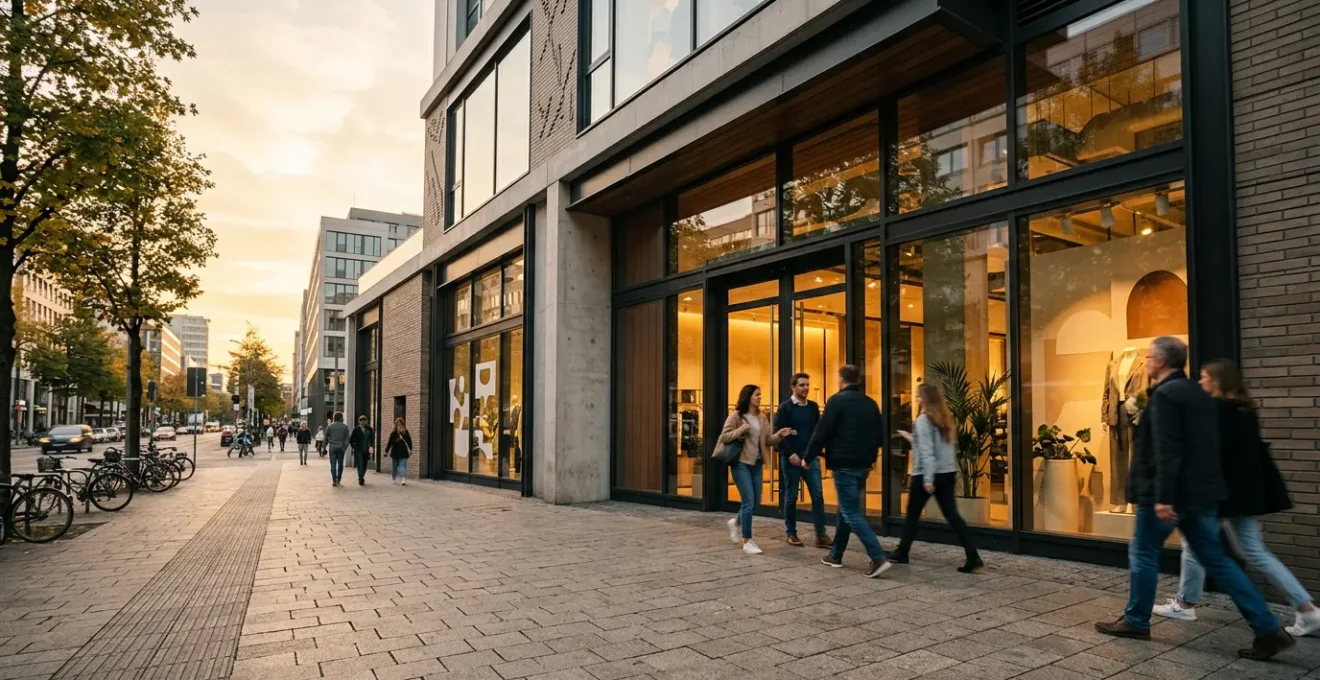
The key to boosting franchisee footfall isn’t a bigger budget, but smarter, hyper-local guerrilla tactics that turn constraints into a competitive advantage.
- Mastering your free Google Business Profile is the non-negotiable foundation for attracting organic walk-ins.
- Micro-influencers and ultra-targeted social ads deliver significantly higher ROI than broad, expensive campaigns.
Recommendation: Start by auditing and optimizing your Google Business Profile today; it’s the highest-impact, zero-cost action you can take to win your local market.
It’s Tuesday morning, and the silence in your franchise location is deafening. You’ve followed the corporate playbook, your branding is perfect, but the footfall just isn’t there, especially during these off-peak hours. The common advice feels generic and expensive: run broad social media campaigns, invest in local radio, or print thousands of flyers hoping a few stick. These strategies often feel like shouting into a void, draining your limited marketing budget with little to show for it.
This approach misses the fundamental truth of franchise marketing. You aren’t fighting a national branding war; you are engaged in catchment area warfare. Your success depends on winning customers within a two-to-three-kilometer radius, not impressing a vague demographic. The standard advice, designed for scale, fails to provide the tactical, results-oriented tools needed for this ground-level fight.
But what if the solution wasn’t a larger budget, but a smarter, more surgical one? What if you could turn your budget constraints into an advantage by focusing on high-ROI, “guerrilla” tactics that your larger, less agile competitors overlook? The real key to driving measurable footfall lies in mastering a handful of hyper-local strategies designed for maximum impact at a minimal cost. It’s about activating off-peak hours and building a direct, digital-to-physical bridge that leads customers straight to your door.
This guide moves beyond the platitudes. We will dissect eight specific, tactical tools that deliver the highest return on investment for franchisees. From transforming your free Google profile into a customer magnet to launching a €100 ad campaign that actually works, you will learn how to build a powerful local marketing engine that drives real, measurable footfall and builds a loyal customer base, even in the most competitive markets.
This article breaks down the essential, high-impact strategies you need to master. The following summary outlines the key pillars of a successful local marketing plan for any franchisee looking to maximize their return on investment.
Summary: Tactical Local Marketing for Maximum Franchisee ROI
- Why an Unoptimized Google Profile Costs You 15% of Organic Walk-Ins?
- Micro-Influencers vs Local Press: Who Actually Drives Traffic in Your Town?
- How to Set Up a 2km Radius Facebook Ad Campaign for Under 100€?
- The Flyer Distribution Mistake That Wastes 90% of Your Print Budget
- When to Run a Flash Sale: Avoiding Cannibalization of Peak Hours?
- How to Optimize Your Store Locator to Capture 30% More Local Search Traffic?
- How to Penetrate a Saturated Market Where Local Competition Is Strong?
- How to Build a Loyal Customer Base That Resists Competitor Discounts?
Why an Unoptimized Google Profile Costs You 15% of Organic Walk-Ins?
Your Google Business Profile (GBP) is not a digital business card; it’s your most powerful free tool for customer acquisition. For a franchisee, an unoptimized profile is the equivalent of having locked doors during business hours. When potential customers search for “coffee near me” or “quick lunch spot,” Google’s local pack is their first point of contact. If your profile is incomplete, has outdated photos, or lacks recent reviews, you are effectively invisible to the most motivated local buyers. This isn’t just a missed opportunity; it’s a direct loss of revenue to competitors who are doing it right.
The data is clear: a fully optimized profile dramatically increases visibility. According to 2025 data, a comprehensive GBP optimization can lead to a 37% increase in local search visibility. This translates directly into more calls, more website clicks, and, most importantly, more physical footfall. Neglecting this asset means you are willingly giving up a significant slice of organic, high-intent traffic. The cost of inaction is steep, as you are not just losing potential customers but also valuable data about who is searching for you and how they find you.
Case Study: Local Bakery Triples Walk-ins
An Austin-based bakery was struggling to attract foot traffic despite a prime location. After claiming and meticulously optimizing their Google Business Profile—adding high-quality photos, responding to all reviews, and using Google Posts to announce daily specials—the results were immediate. Within weeks, their walk-in traffic tripled, phone inquiries surged, and their listing began to dominate local map results for relevant keywords. This demonstrates that mastering your GBP is a direct lever for pulling customers from the digital world into your physical store.
Optimizing your profile is a continuous process of engagement. It involves more than just filling out the basic information. Regularly updating photos, encouraging and responding to reviews (both positive and negative), and utilizing the Q&A feature shows both customers and Google’s algorithm that your business is active and customer-focused. This digital-to-physical bridge is the cornerstone of modern local marketing for any brick-and-mortar franchise.
Micro-Influencers vs Local Press: Who Actually Drives Traffic in Your Town?
In the battle for local attention, the old guard of local press and radio ads is rapidly losing ground to a more agile and authentic force: the micro-influencer. While a feature in the local newspaper might offer a fleeting sense of prestige, it often lacks a clear call to action and measurable ROI. Today’s customers, especially younger demographics, place their trust in peer recommendations. A local food blogger with 5,000 engaged followers can drive more footfall on a Tuesday morning than a quarter-page ad ever could, simply because their endorsement feels like a genuine tip from a friend.
The power of micro-influencers lies in their niche authority and high engagement rates. Unlike mega-influencers with millions of passive viewers, local creators cultivate a dedicated community that truly trusts their judgment. This trust is invaluable. Research consistently shows this advantage; for instance, one analysis reveals that micro-influencers achieve a 1.81% engagement rate, significantly higher than the 1.24% for mid-tier influencers. For a franchisee, this means your message is not just seen; it’s considered and acted upon by a highly relevant local audience.
This strategy is a prime example of asset asymmetry, where your smaller, local-focused approach becomes a strength. A national chain can’t easily build authentic relationships with dozens of small-town creators. You can. Identify local influencers whose audience perfectly matches your target customer, whether it’s a parent blogger, a fitness enthusiast, or a student vlogger. Instead of a one-off payment, build a real partnership. Offer them a unique experience, an exclusive tasting, or co-host a small event. Their authentic content will serve as powerful, long-lasting social proof that drives immediate and future business.
From Evok Advertising’s 2024 analysis, over 52% of consumers are likely to act on food and drink influencer content. This highlights that for restaurants and cafes, tapping into this network is no longer optional. It’s a core component of effective “off-peak activation,” turning a slow afternoon into a bustling one with a single, well-placed post from a trusted local voice.
How to Set Up a 2km Radius Facebook Ad Campaign for Under 100€?
Facebook Ads can feel like a money pit for franchisees if not handled with surgical precision. The key to a positive ROI is not a large budget but hyper-local targeting. Forget targeting an entire city or broad interests. Your most valuable customers are often within a 2km radius of your physical location. A well-crafted campaign, focused exclusively on this “catchment area,” can be executed for less than €100 and deliver a measurable increase in footfall, especially during your quietest hours.
The mistake most small businesses make is relying solely on radius targeting. This is a start, but it’s not enough. A 2024 study by AdEspresso analyzing 50,000 local business campaigns found that relying on radius targeting alone resulted in a 47% higher cost per acquisition compared to layered approaches. The secret to a micro-budget ROI is combining the tight geographic radius with specific demographic and interest layers. Target people who not only live or work nearby but also have interests that align directly with your product or service (e.g., “yoga and wellness” for a healthy cafe, “new parents” for a child-friendly business).
Setting up this campaign is straightforward. In your Facebook Ads Manager, the “Advantage+ Audience” settings allow you to drop a pin on your business address and set a tight radius. From there, layer in the crucial details: age, gender, and interests. The final step is crafting a compelling offer. Don’t just advertise your brand; create a “traffic offer” specifically designed to get people in the door. This could be a “Two-for-One Tuesday” or a “Free Coffee with Lunch” valid only on weekdays before 2 PM. The ad creative should be simple, mobile-first, and clearly state the offer and its limitations.
With a budget of just €5-€10 per day, you can reach thousands of highly relevant local consumers over a week or two. The goal isn’t just impressions; it’s off-peak activation. By running your campaign to promote a specific, time-sensitive offer during your slow periods, you can directly influence traffic patterns and turn your fixed costs into profitable revenue generators. Track your results not just in clicks, but in how many people mention the ad when they come in.
The Flyer Distribution Mistake That Wastes 90% of Your Print Budget
Flyer distribution is one of the oldest forms of local marketing, but most franchisees execute it with a “spray and pray” approach that wastes the vast majority of their budget. Blanketing entire neighborhoods or leaving stacks of flyers in random locations is inefficient and ineffective. The key to making print work in a digital age is not volume, but surgical precision. The biggest mistake is treating distribution as an afterthought, when in reality, it is the most critical component of the entire campaign.
A successful flyer campaign is a game of strategic zoning. Instead of printing 10,000 flyers and hoping for the best, print 1,000 and have a detailed plan for every single one. Who is your ideal customer on a Tuesday morning? Is it a stay-at-home parent, a remote worker, or a student? Your distribution strategy must reflect this. This might mean hand-delivering flyers only to specific residential blocks, partnering with complementary (but non-competing) local businesses to display them at their counters, or targeting community centers where your audience gathers. Industry benchmarks show that even with targeted distribution, you can expect around 35 replies for every 1,000 flyers. A scattergun approach yields far less.
The flyer itself must also work harder. It should not just be an announcement; it must be a high-value, trackable offer. Include a compelling, time-sensitive deal that is exclusive to the flyer (e.g., “Bring this flyer for 20% off your next purchase”). This creates urgency and, crucially, allows you to measure the campaign’s direct ROI. Every flyer that comes back is a data point proving your strategy is working. This is the essence of a guerrilla marketing mindset: every action must be measurable and optimized.
Think of your distribution as building a physical-to-physical bridge. You are physically placing a compelling reason to visit into the hands of someone who is geographically and demographically your perfect customer. Avoid low-quality, generic printing. A well-designed, professional-looking flyer on good quality paper stock signals a quality business and is less likely to be immediately discarded. The small extra cost per unit is more than offset by a significantly higher response rate.
When to Run a Flash Sale: Avoiding Cannibalization of Peak Hours?
Flash sales are a powerful tool in a franchisee’s arsenal, but if used incorrectly, they can be a double-edged sword. The biggest risk is cannibalization: offering a discount that simply incentivizes your existing, full-price customers to pay less during hours they would have visited anyway. A successful flash sale doesn’t discount existing revenue; it generates new revenue by strategically driving traffic during your quietest periods. The “when” is more important than the “what.”
The core principle is to use flash sales exclusively for off-peak activation. Analyze your sales data to identify your dead zones—for many businesses, this is mid-morning or mid-afternoon on weekdays. These are the timeslots your flash sale should target. A “Happy Hour” from 2 PM to 4 PM or a “Morning Boost” offer from 10 AM to 11:30 AM can turn an operational drain into a profitable period. By smoothing out your daily footfall, businesses report achieving 5-20% savings on operational costs, as staff and resources are utilized more efficiently throughout the day.
Your promotional channels for the flash sale must also be strategic. Use channels that allow for immediate and time-sensitive communication. This includes:
- Google Business Profile Posts: Announce the flash sale a day or two in advance. These posts appear directly in your search and map listings.
- Email/SMS List: If you have a customer list, this is the perfect channel for a last-minute push.
- Hyper-Targeted Social Ads: Run a small-budget ad for 24-48 hours targeting your 2km radius, as detailed previously.
The goal is to create a sense of urgency and exclusivity without devaluing your brand long-term. Always frame the offer as a special, limited-time event, not a permanent discount.
Case Study: Chipotle’s BOGO Flash Sale
In a targeted campaign in France, Chipotle utilized flyers distributed by Oppizi to promote a buy-one-get-one-free flash sale. The time-limited nature of the offer, combined with strategic distribution, created a powerful incentive. The campaign resulted in over 550 new in-store purchases directly attributable to the promotion, demonstrating how a well-timed, well-communicated flash sale can generate a significant and immediate surge in footfall without disrupting core business hours.
How to Optimize Your Store Locator to Capture 30% More Local Search Traffic?
For a multi-location franchise, the store locator on the corporate website is a critical, yet often neglected, digital asset. Many franchisors use a generic, one-size-fits-all locator that does little more than list an address and phone number. This is a massive missed opportunity. An optimized store locator should function as a network of individual, hyper-local landing pages, each designed to capture high-intent search traffic for its specific franchisee. When someone searches “pizza in downtown Springfield,” your franchisee’s specific page should be competing for the top spot.
The first step is to move beyond a simple map and create location-specific landing pages for each franchise. Each page must be optimized with local keywords (e.g., “best coffee in the Mission District”), the local manager’s name, and area-specific testimonials. This humanizes the location and provides Google with rich, relevant content that signals local authority. Research shows that 68% of local searchers click the “Get Directions” button, so embedding a clear, functional Google Map is non-negotiable. Furthermore, adding location-based schema markup to each page helps search engines understand and feature your address, hours, and phone number in rich results.
To truly turn the locator into a revenue driver, integrate transactional functionality. Adding “Book Now” or “Order Ahead” buttons directly on the location page removes friction and captures the customer at their moment of highest intent. This transforms the locator from a simple directory into a powerful part of the digital-to-physical bridge. It guides the customer not just to your location, but through to a completed transaction.
Finally, each page should link to that specific franchise’s local social media profiles. This reinforces the local identity and gives customers another way to connect. A well-optimized store locator network doesn’t just serve users who are already on the corporate site; it actively pulls in new, organic search traffic for each individual franchisee, directly contributing to their bottom line.
Your 5-Point Local Signal Audit Plan
- Points of Contact: List all digital channels where your franchise location’s name, address, and phone number (NAP) are mentioned (e.g., GBP, Yelp, Facebook Page, website locator).
- Data Collection: Inventory the current information on each platform. Is the address format identical everywhere? Are the hours correct? Are the photos recent?
- Consistency Check: Compare the collected data against your official franchise information. Identify every inconsistency, no matter how small (e.g., “St.” vs. “Street”).
- Memorability & Emotion: Review your photos and descriptions. Do they look generic and corporate, or do they uniquely represent your specific location and community?
- Integration Plan: Create a prioritized list of corrections. Start with the highest-impact platforms like your Google Business Profile and store locator page to fix inconsistencies and fill content gaps.
How to Penetrate a Saturated Market Where Local Competition Is Strong?
Entering a market already crowded with established local competitors can feel like an uphill battle. As a franchisee, you may have brand recognition, but you lack the deep-rooted community ties of the independent coffee shop or family-run restaurant down the street. Trying to compete on their terms—loyalty built over years—is a losing game. Instead, you must engage in asset asymmetry: leveraging the strengths they don’t have, namely a more sophisticated approach to digital marketing and the backing of a larger brand.
Your first move should be to dominate the digital space where local independents are often weakest. This starts with a flawless execution of the fundamentals: a perfectly optimized Google Business Profile and a hyper-targeted local social media presence. While the local favorite might rely on word-of-mouth, you can systematically capture every “near me” search. Furthermore, data shows that paid search ads can increase brand awareness by up to 80%. A small, targeted Google Ads campaign focused on your franchise’s specific offerings can quickly build visibility among high-intent customers in your catchment area.
The second pillar of your strategy is differentiation through experience. Don’t try to be the “cozy, local spot” if that’s not your brand’s DNA. Instead, lean into your strengths. Are you faster? More convenient? Do you offer online ordering or a loyalty app that the competition doesn’t? Highlight these points of difference relentlessly in your marketing. Your goal is not to steal their loyal customers, but to win over the segment of the market that values the specific benefits you offer.
Finally, engage in strategic partnerships. Identify non-competing local businesses that share your target audience and propose a cross-promotional partnership. For example, a new gym franchise could partner with a local health food store, or a children’s activity center could team up with a family-friendly café. This allows you to tap into an existing customer base and build credibility through association. By combining digital dominance, clear differentiation, and strategic alliances, you can carve out a profitable niche even in the most saturated of markets.
Key Takeaways
- True footfall ROI comes from surgical, low-cost local tactics, not large, generic budgets.
- An optimized Google Business Profile is your single most powerful, zero-cost tool for attracting motivated walk-in customers.
- Focus on “off-peak activation” with targeted flash sales and ads to turn your quietest hours into profitable ones.
How to Build a Loyal Customer Base That Resists Competitor Discounts?
Driving initial footfall is one challenge; building a loyal customer base that keeps coming back is another. In a competitive local market, customers are constantly tempted by competitor discounts and promotions. The only sustainable defense against this is to build a relationship that transcends price. Loyalty isn’t just about a punch card; it’s about making your customers feel seen, valued, and part of a community. For a franchisee, this means combining the efficiency of your brand’s systems with a personal, local touch.
The foundation of this relationship is consistent, positive experiences. Every interaction, from the welcome at the door to the quality of the product, must reinforce the customer’s decision to choose you. However, modern loyalty is built both in-store and online. Use your local social media channels not just to promote, but to engage. Feature user-generated content, run local contests, and tell the stories of your team and your customers. This creates a sense of belonging that a simple discount from a competitor can’t easily break. It’s about turning transactions into relationships.
Leverage targeted digital tools to nurture this growing loyalty. Use your email or SMS list to send exclusive offers and early access to new products to your best customers. This reinforces their “insider” status. Facebook’s custom audiences are another powerful tool. You can upload your customer list to create a highly targeted ad campaign that re-engages past visitors with a special “welcome back” offer, delivering an exceptional return on ad spend.
Case Study: Salon Achieves 10x ROAS with Loyalty Targeting
Salon marketing expert Stephanie Mitchell shared a powerful example of this strategy in action. A facial spa client used targeted Facebook campaigns focused on re-engaging past customers and building relationships. With a modest ad spend of just $210, the spa generated 80 leads, which led to 33 bookings and $2,150 in revenue. This incredible 10x return on ad spend was achieved not by chasing new customers, but by nurturing the loyalty of existing ones, proving that the most profitable customer is often the one you already have.
Stop waiting for customers to find you. Start implementing these tactical guerrilla strategies to actively win your local market, one customer at a time. The path to a thriving franchise begins with mastering your immediate catchment area and turning every marketing dollar into a measurable return.